Friedrich Engels
Biography
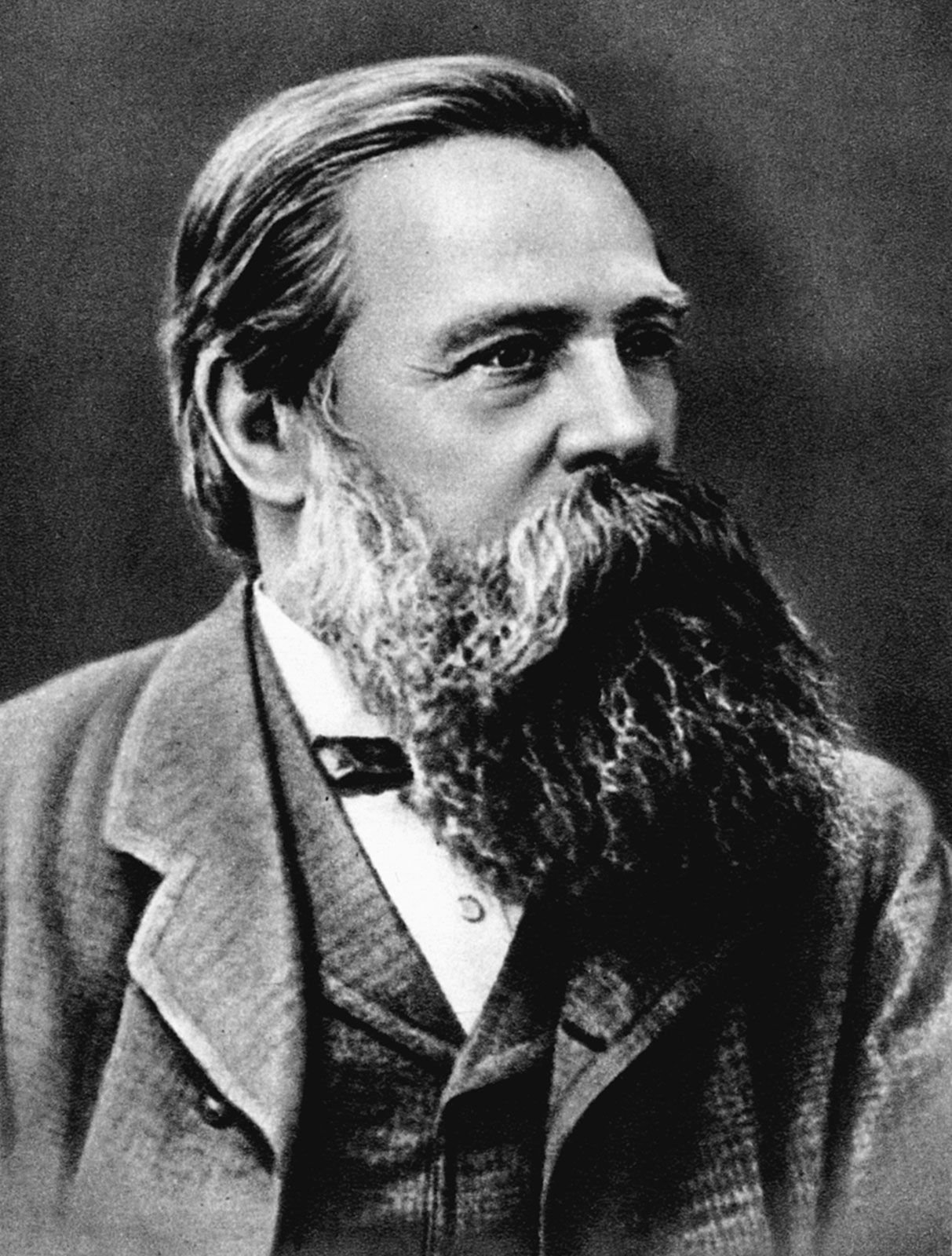
Friedrich Engels (1820–1895) was a German philosopher, political theorist, journalist, businessman and revolutionary socialist. A close collaborator and lifelong friend of Karl Marx, Engels played a central role in the development and dissemination of the body of socialist theory that would later become known as Marxism. He was born in Barmen, Prussia, into the family of a wealthy textile manufacturer.
As a young man Engels developed radical political views despite the conservative and religious environment of his family. In 1842 he was sent to Manchester to work at Ermen & Engels, a textile business in which his father was a partner. His experiences in one of the world's leading industrial cities brought him into direct contact with the conditions of the industrial working class and with the British labour movement, including Chartism.
Engels drew upon these experiences in The Condition of the Working Class in England, published in German in 1845. The work examined industrialisation, poverty, housing, disease and class relations in English cities, particularly Manchester. During this period Engels also formed a relationship with Mary Burns, an Irish working-class woman whose knowledge of Manchester helped introduce him to working-class districts and political circles.
Engels first met Marx briefly in 1842 and met him again in Paris in 1844. Their second meeting began a political, intellectual and personal partnership that lasted until Marx's death nearly four decades later. Together they wrote works including The Holy Family, The German Ideology and, most famously, the Manifesto of the Communist Party, commissioned by the Communist League and published in 1848.
Engels participated directly in the revolutionary struggles that followed the revolutions of 1848, including armed fighting during the uprisings in Baden and the Palatinate in 1849. After the defeat of the revolutionary movement, he eventually returned to Manchester and resumed commercial work. Although he disliked his role in business, the income it provided allowed him to financially support Marx and the Marx family, enabling Marx to continue his political and economic research.
Engels retired from business in 1869 and later moved to London, where he worked closely with Marx and remained involved in the international socialist movement. He produced important works of his own, including Anti-Dühring, Socialism: Utopian and Scientific, Dialectics of Nature and The Origin of the Family, Private Property and the State. His writings contributed significantly to the development and popularisation of Marxist approaches to philosophy, history, political economy and the natural sciences.
Following Marx's death in 1883, Engels became responsible for organising the large collection of unfinished manuscripts Marx had left behind. Using these materials, he edited and published Volume II of Capital in 1885 and Volume III in 1894. This work required Engels to reconstruct arguments from Marx's drafts and made him instrumental in preserving and publishing a substantial part of Marx's mature economic work.
During his final years Engels was an influential figure in the rapidly expanding international socialist movement and corresponded extensively with socialist activists and organisations throughout Europe and beyond. He died in London on 5 August 1895, aged 74. At his request, his body was cremated and his ashes were scattered off Beachy Head on the south coast of England.