Karl Marx
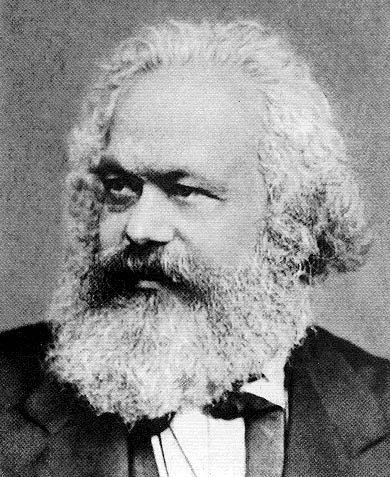
Biography
Karl Marx (1818–1883) was a German philosopher, economist, journalist and revolutionary socialist whose work became foundational to the development of modern socialist and communist thought. Born in Trier, Prussia, Marx studied law and philosophy at the universities of Bonn and Berlin, where he became associated with the Young Hegelians and developed an increasingly radical critique of religion, politics and the Prussian state.
Marx began his professional career in journalism, becoming an editor of the Rheinische Zeitung in 1842. Following the newspaper's suppression by the Prussian authorities, he moved to Paris in 1843. There he became increasingly involved in the socialist movement and, in 1844, began his lifelong intellectual and political collaboration with Friedrich Engels. Expelled from France, Marx subsequently lived in Brussels, where he and Engels joined the Communist League and were commissioned to produce the Manifesto of the Communist Party, published in 1848.
Following the revolutions of 1848, Marx returned briefly to Germany and edited the Neue Rheinische Zeitung in Cologne. After the defeat of the revolutionary movements, he was expelled from Prussia and eventually settled in London in 1849, where he would live for the remainder of his life. Much of Marx's time in London was spent studying political economy, particularly at the British Museum, while his family frequently experienced severe financial hardship. Engels provided Marx and his family with substantial financial support during this period.
Marx's studies of capitalism culminated in Capital: A Critique of Political Economy. The first volume was published in 1867, while the second and third volumes were assembled and published by Engels after Marx's death from manuscripts and notes left behind by him. Marx also produced numerous works on philosophy, history, economics and contemporary politics, including The Eighteenth Brumaire of Louis Bonaparte, A Contribution to the Critique of Political Economy, The Civil War in France and Critique of the Gotha Programme.
Marx remained politically active throughout much of his life. In 1864 he played a leading role in the International Working Men's Association, later commonly known as the First International. His political and theoretical work emphasised class struggle, the historical development of modes of production, the exploitation of wage labour under capitalism and the possibility of the working class overthrowing capitalist social relations.
Marx's health deteriorated during his later years, particularly following the death of his wife Jenny in 1881 and his eldest daughter Jenny Caroline in January 1883. He died in London on 14 March 1883, aged 64, and was buried at Highgate Cemetery. His writings and his collaboration with Engels subsequently exerted an enormous influence on socialist movements, trade unions, political parties, revolutionary movements and the development of Marxist thought internationally.