Frederick Lessner
Biography
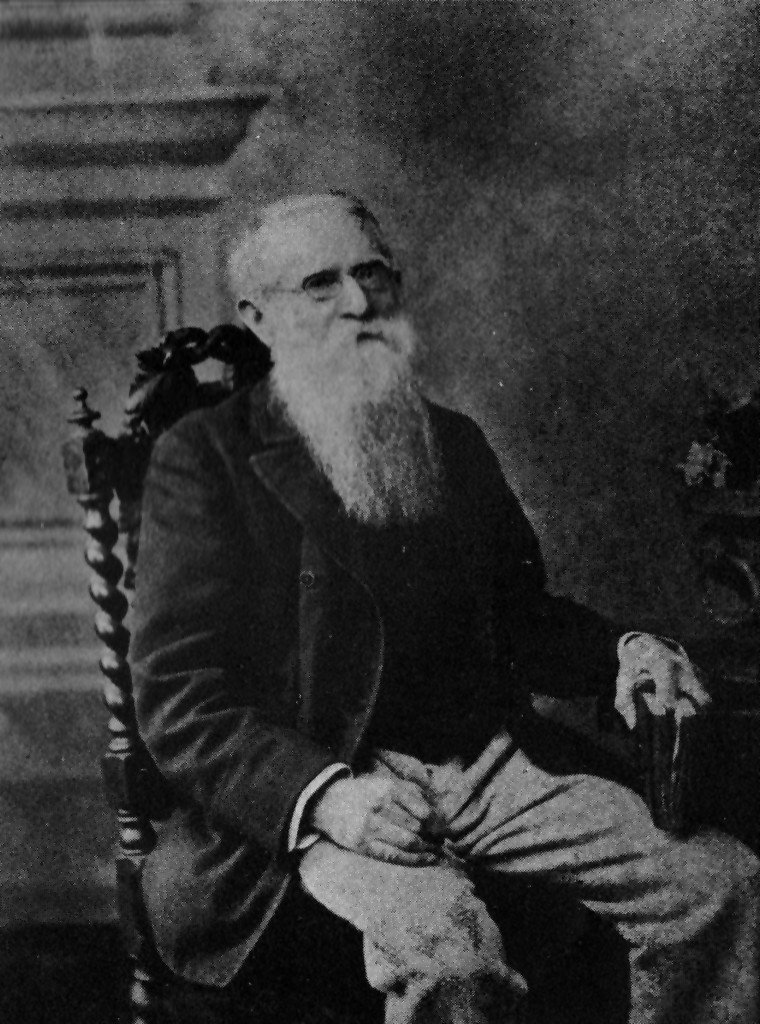
Frederick Christian Eduard Lessner (1825–1910), also known as Friedrich Leßner, was a German tailor, revolutionary and socialist activist whose political life connected the Communist League of the 1840s with the international labour movement of the late nineteenth century. He was born at Blankenhain in the Grand Duchy of Saxe-Weimar on 27 February 1825. His father died when Lessner was young, and poverty shaped his childhood and education.
After completing an apprenticeship as a tailor, Lessner began travelling in search of work in 1842 and reached Hamburg the following year. There he encountered the poverty produced by early industrialisation and became involved in workers’ educational activity. He joined the Hamburg Workers’ Educational Association in 1846 and was initially influenced by the utopian communist ideas of Wilhelm Weitling.
Lessner moved to London in 1847, partly to avoid military service. He joined the Communist Workers’ Educational Society and came into contact with Karl Marx and Friedrich Engels. When the Communist League commissioned Marx and Engels to write the Manifesto of the Communist Party, Lessner carried its manuscript to the printer and later returned the proofs for correction.
During the revolutions of 1848, Lessner returned to Germany and became an active Communist League organiser. In Cologne he distributed the Neue Rheinische Zeitung and read its articles aloud to fellow workers. He also helped reorganise the Cologne Workers’ Association and subsequently established a workers’ association at Wiesbaden, serving as its president. The restoration of conservative rule brought renewed police persecution, and Lessner was arrested at Mainz in June 1851.
Lessner remained in pre-trial detention for roughly eighteen months before appearing as one of the defendants in the Cologne Communist Trial. The Prussian prosecution relied upon police agents and falsified evidence in its effort to portray the Communist League as a treasonable conspiracy. In November 1852 Lessner was convicted and sentenced to three years’ imprisonment in a fortress, which he served at Graudenz and Silberberg.
After his release, Lessner returned to London in 1856 and resumed activity in the German workers’ movement there. He became a leading member of the Communist Workers’ Educational Society and helped reconnect it with Marx and other former members who had withdrawn during earlier political disputes. Lessner supported himself and his family principally through tailoring while maintaining a close friendship with Marx and Engels.
Lessner participated in the establishment of the International Working Men’s Association in 1864 and served on its General Council. He represented the organisation at conferences and congresses in London, Lausanne, Brussels, Basel and The Hague, and also served on its British Federal Council. Within the International he generally supported Marx and Engels in debates over political organisation and the direction of the workers’ movement.
In later decades Lessner remained active in the British labour movement and participated in the Independent Labour Party. He opposed Eduard Bernstein’s revisionism within German social democracy and became respected among German Social Democrats as one of the movement’s surviving “old guard”. Although he lived modestly, he attended several German party gatherings and congresses of the Second International as an honoured guest.
Lessner recorded his experiences in memoirs and articles, including A Worker’s Memories of Karl Marx and Sixty Years in the Social-Democratic Movement. These writings preserve a working-class participant’s account of the Communist League, the revolutions of 1848, the Cologne trial and the First International. He died in London on 1 February 1910, aged 84.